


Released on February 12, 1955, Beanstalk Bunny is an animated short directed by Chuck Jones, with the story by Michael Maltese. Starring Bugs Bunny, Daffy Duck, and Elmer Fudd, the cartoon offers a playful reimagining of the fairy tale Jack and the Beanstalk.
Produced during a particularly productive period at Warner Bros. Cartoons, it showcases the growing sophistication of Jones’ storytelling and character design in the mid-1950s.
A Familiar Fairy Tale, Reimagined
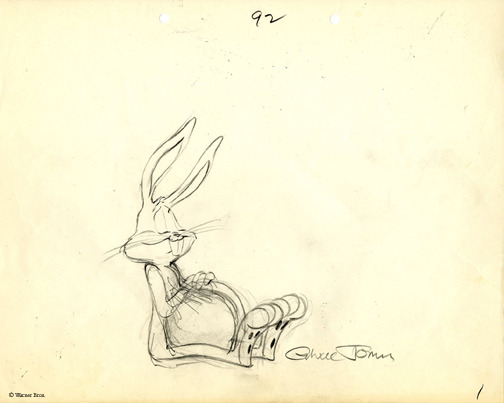
Beanstalk Bunny doesn’t simply retell the classic story; it uses it as a springboard for character-driven comedy.
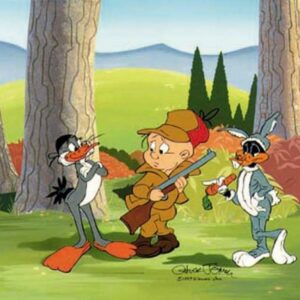
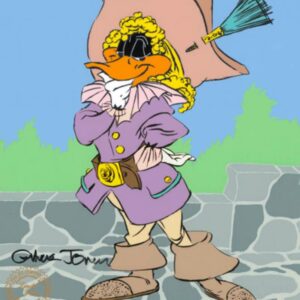
Daffy Duck plays Jack, driven by greed and impatience. Bugs Bunny is the clever, opportunistic foil, always staying a step ahead. Elmer Fudd becomes the giant, less a villain than a persistent, increasingly exasperated obstacle who unwittingly fuels the chaos.
This dynamic illustrates Chuck Jones’ storytelling philosophy: humor comes not from gag accumulation, but from the interplay of well-defined personalities. Daffy’s impulsiveness, Bugs’ measured cunning, and Elmer’s grounded reactions create a rhythm of contrast and timing, letting each character’s traits drive the comedy.
Direction, Timing, and Visual Design
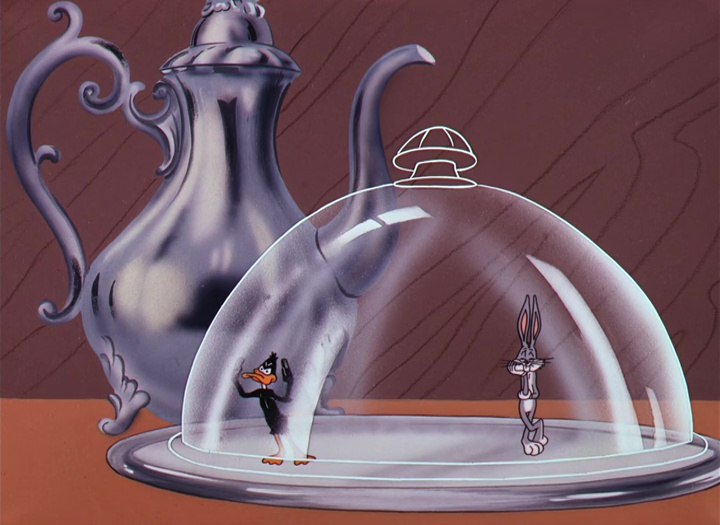
Jones’ direction emphasizes clarity and control. Subtle gestures, facial expressions, and perfectly timed pauses allow every character’s intent to shine. Movement is purposeful, supporting performance rather than overwhelming it.
The beanstalk itself provides opportunities for exaggerated scale and visual contrast. Oversized environments and elevated perspectives reinforce the fairy tale premise while enhancing visual humor.
These choices reflect Jones’ broader stylistic shift in the 1950s toward stronger composition and deliberate storytelling.
Context Within Chuck Jones’ Career
Beanstalk Bunny sits among the cartoons that define Jones’ evolving style. Following works like Duck Amuck (1953) and preceding What’s Opera, Doc? (1957), it highlights his increasing focus on character psychology as the engine of comedy.
The collaboration with Michael Maltese was key. Their shared commitment to structure, restraint, and character consistency resulted in cartoons that balance humor with narrative clarity and artistic intent.
Lasting Significance
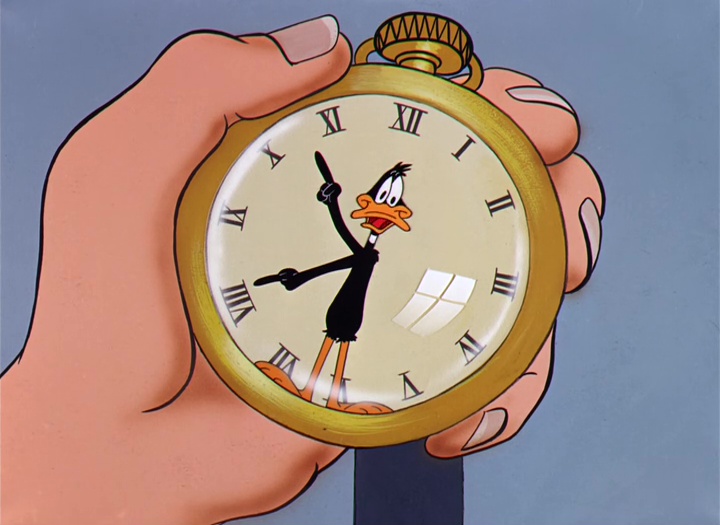
Nearly 70 years later, Beanstalk Bunny is still a prime example of Jones’s approach to animated storytelling. Its measured pacing, sharply defined characters, and inventive spin on a familiar story show why his work from this period continues to influence animators and audiences alike.
The cartoon endures not simply as a fairy tale parody but as a reflection of an era when theatrical animation achieved a new level of sophistication, guided by one of its most accomplished directors.
Want a closer look? Watch the clip on our Instagram page.





0 Comments