


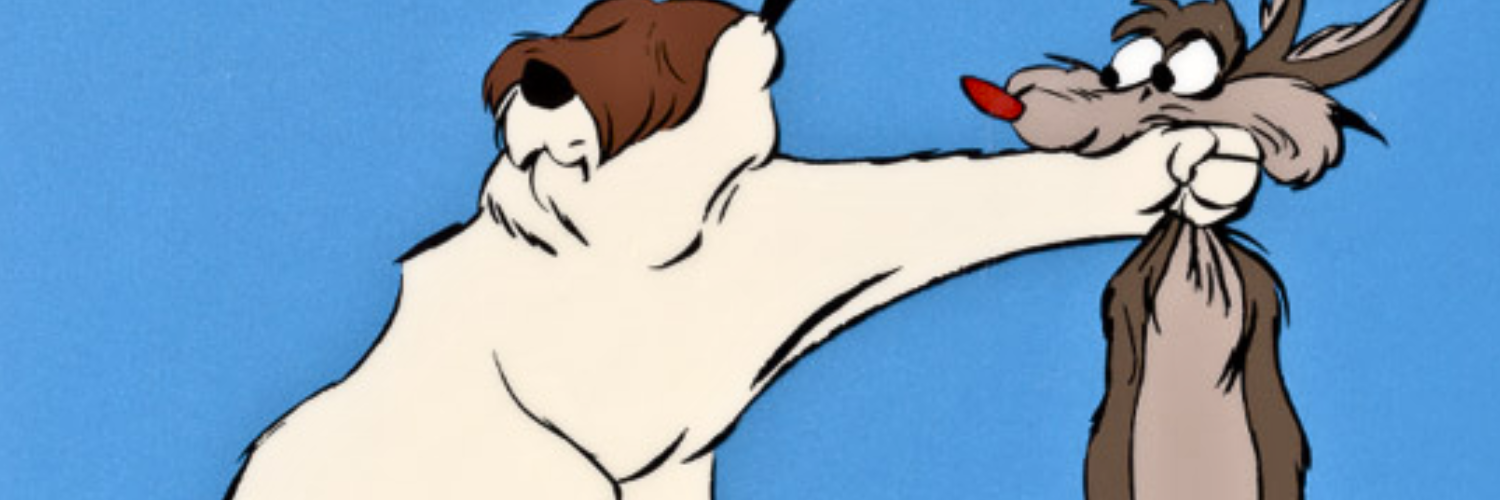
In 1953, Chuck Jones and Michael Maltese introduced a new comedic duo. They added Ralph Wolf and Sam Sheepdog to the Looney Tunes universe.
Their debut short, Don’t Give Up the Sheep, is a prototype for the six Chuck Jones-directed follow-up escapades. It establishes a framework that remains delightfully unique even in Warner Bros.’s rich tapestry of animation history.
A Day at the “Office”: A Unique Spin on the Chase Comedy
Don’t Give Up the Sheep introduces us to a world with a unique routine. Each morning, Ralph Wolf and Sam Sheepdog clock in for work. They shake hands cordially. Then, they work as adversaries for the rest of their “shift.”
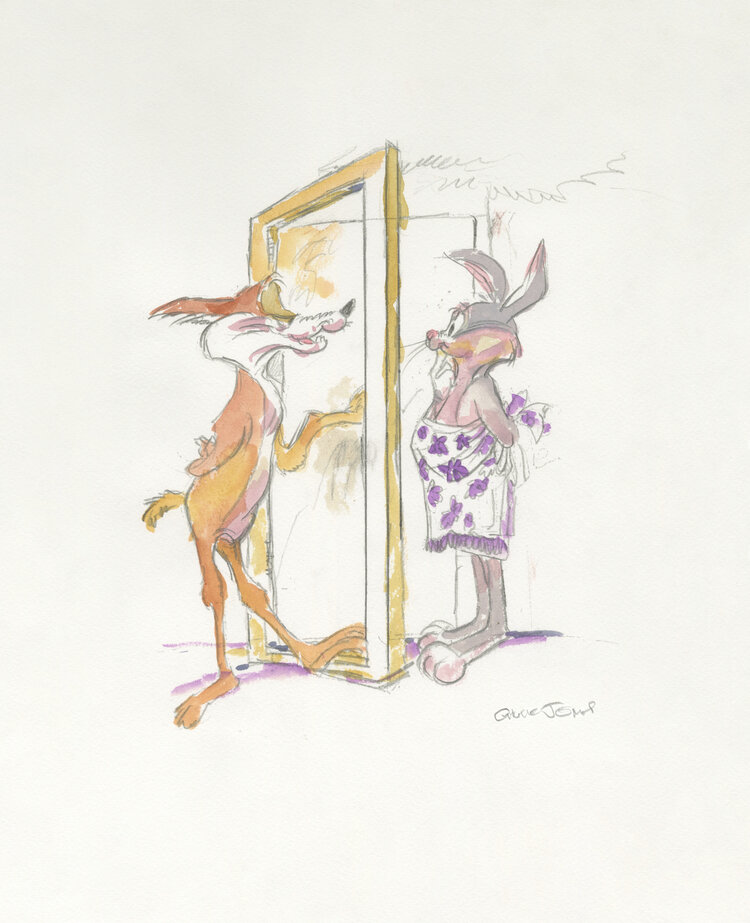
This twist on the classic predator-prey dynamic flips expectations on their heads. Ralph Wolf (who, at this point, remains unnamed but visually resembles a red-nosed Wile E. Coyote) plots elaborate schemes to steal sheep. Sam Sheepdog, known as Ralph in this first outing, has an unflappable demeanor and stoically foils every attempt. He wears a mop of shaggy bangs to complement his style.
The short’s brilliance lies in its reliance on visual gags rather than dialogue. Mel Blanc voices both characters. He also occasionally voices the “Baa” from the sheep. The humor comes alive through impeccable timing, dynamic animation, and Carl Stalling’s playful score. Ken Harris, Ben Washam, and Lloyd Vaughan’s animation bring every pitfall and near-miss to life. Carlos Manriquez’s pastoral backgrounds create a deceptively serene setting for the chaos.

A Wolf by Any Other Name
Interestingly, “Don’t Give Up the Sheep” plays fast and loose with names. The wolf would later be formally christened Ralph Wolf, a nod to Warner Bros. story man Ralph Wolf, while Sam Sheepdog’s name would also find consistency in later shorts. These early naming inconsistencies include Ralph being called Sam. The wolf is unnamed or called George in Sheep Ahoy. These inconsistencies add a layer of trivia that animation enthusiasts adore.
Jones’ Experiment: The Anti-Chase
Chuck Jones, ever the innovator, envisioned Ralph and Sam as the antithesis of his Road Runner and Wile E. Coyote series. Where the latter is a relentless, high-speed pursuit, Ralph and Sam’s conflict is slow, methodical, and surprisingly bureaucratic. The punch clock gag—a comedic stroke of genius—frames their rivalry as less about survival and more about job performance. It’s this blend of absurdity and relatability that has endeared these characters to audiences for decades.
A Team Effort: Behind the Scenes
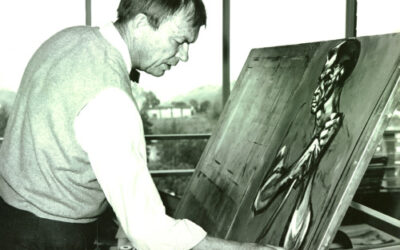
The brilliance of “Don’t Give Up the Sheep” is a testament to the talents of its creators. Chuck Jones’ direction is sharp and innovative, while Michael Maltese’s story brims with wit and subversive charm. Edward Selzer’s (uncredited) production ensured the seamless collaboration of a top-tier animation team. The music by Carl Stalling underscores every comedic beat, enhancing the gags with an orchestral wink to the audience.

The Legacy of “Don’t Give Up the Sheep”
This debut short set the stage for Ralph and Sam’s enduring appeal. It paved the way for classics like Double or Mutton and Steal Wool. It also solidified a unique niche in Warner Bros.’ repertoire: a workplace comedy disguised as a predator-prey showdown. The juxtaposition of professional civility and cartoonish violence remains unmatched in its cleverness.
For fans of animation history, “Don’t Give Up the Sheep” isn’t just a cartoon. It’s a case study of how creative minds like Jones and Maltese take a simple premise, and then elevate it into a timeless classic. So, as Ralph and Sam would say, “Good morning, Ralph. Good morning, Sam.”
Let’s punch in and celebrate the genius of their inaugural outing.

0 Comments