


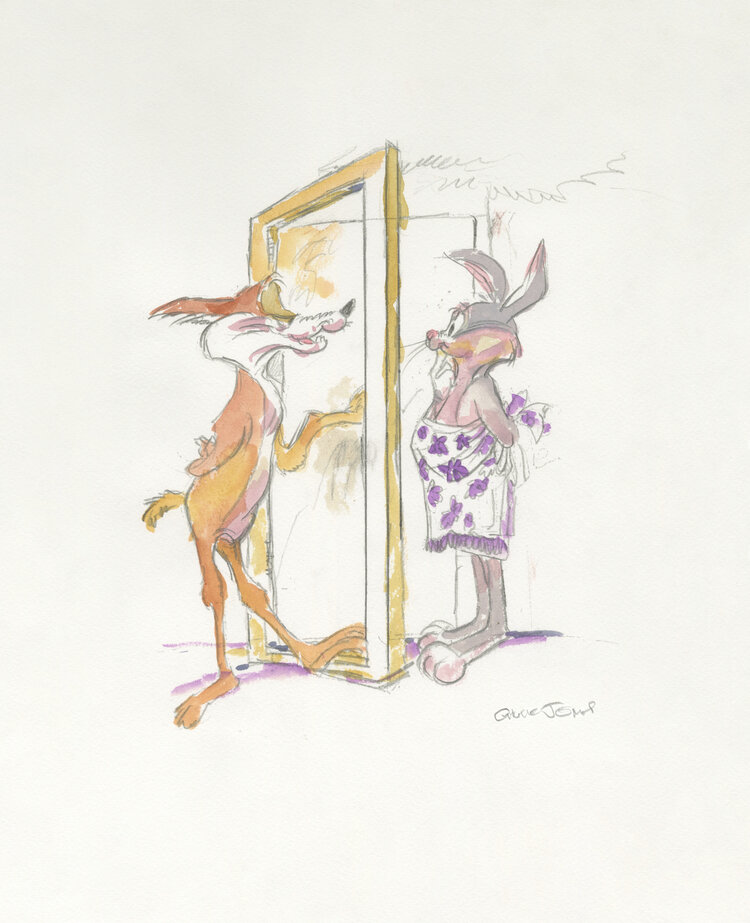
Directed by the legendary Chuck Jones and written by Michael Maltese, Rabbit Fire is a classic 1951 Looney Tunes cartoon starring Bugs Bunny, Daffy Duck, and Elmer Fudd. This animated short is our selected May Monthly Film Feature … and to celebrate we are offering free framing on any qualifying Hunting Trilogy artwork … plus mention Rabbit Fire to receive a contemporary Fine Art Lobby Poster gift with any qualifying art purchase.

It’s Open Season on everyone! Rabbit Fire is the first of Chuck Jones Hunting Trilogy (or as Chuck once commented, the first Duck Season/Rabbit Season collisions with Daffy Duck). It’s also the first cartoon to feature a feud between Bugs and Daffy.
Between 1951 and 1953, the legendary animator directed three Hunting Trilogy animated shorts – Rabbit Fire, Rabbit Seasoning, and Duck! Rabbit! Duck! Considered three of the best classic shorts, the formula may seem elementary, but what makes these film classics ingenious are the small variations in the execution of each one.
This first film demonstrates a significant shift in Daffy’s personality. He goes from being the crazy ‘screwball’ character who dumbfounded his foes, to a much more contradictory one, full of greed and ego, craving attention under the spotlight. This personality change, which was previously seen in the Chuck Jones-directed shorts, You Were Never Duckier and Daffy Dilly, and even earlier in Friz Freleng-directed shorts, You Ought to Be in Pictures, was done so that Daffy would better serve as Bugs’ adversary. Bugs Bunny’s rising popularity began to surpass Daffy over the years, expanding the need for the studio to pair off the duo.
In Rabbit Fire, there was another revelation. Mel Blanc showcased his ability to make one character imitate another character’s voice, in this case, Daffy Duck impersonating Bugs Bunny and vice versa.
In a classic conflict between the three characters, Rabbit Fire is an iconic example of the classic Warner Bros. cartoons that have been beloved for generations. The cartoon is known for its clever writing, witty dialogue, and memorable Looney Tunes characters.
The cartoon highlights the unique comedic timing and wit that Jones and Maltese were known for, making it one of the most beloved Looney Tunes shorts ever created.
Contact your art consultant or email [email protected] for more details about Rabbit Fire-related art and our May Monthly Film Feature promotion. Enjoy the Chuck Jones-directed Rabbit Fire cartoon HERE.

0 Comments