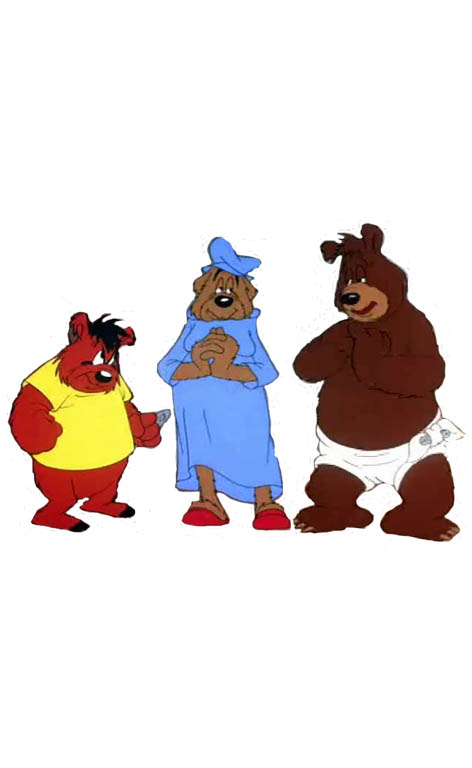
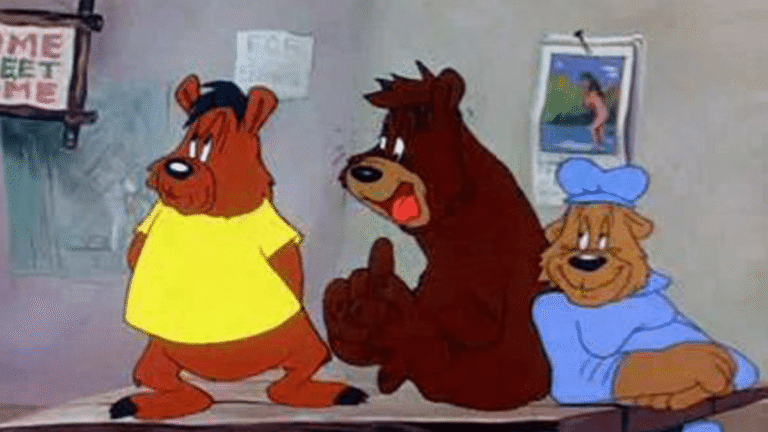
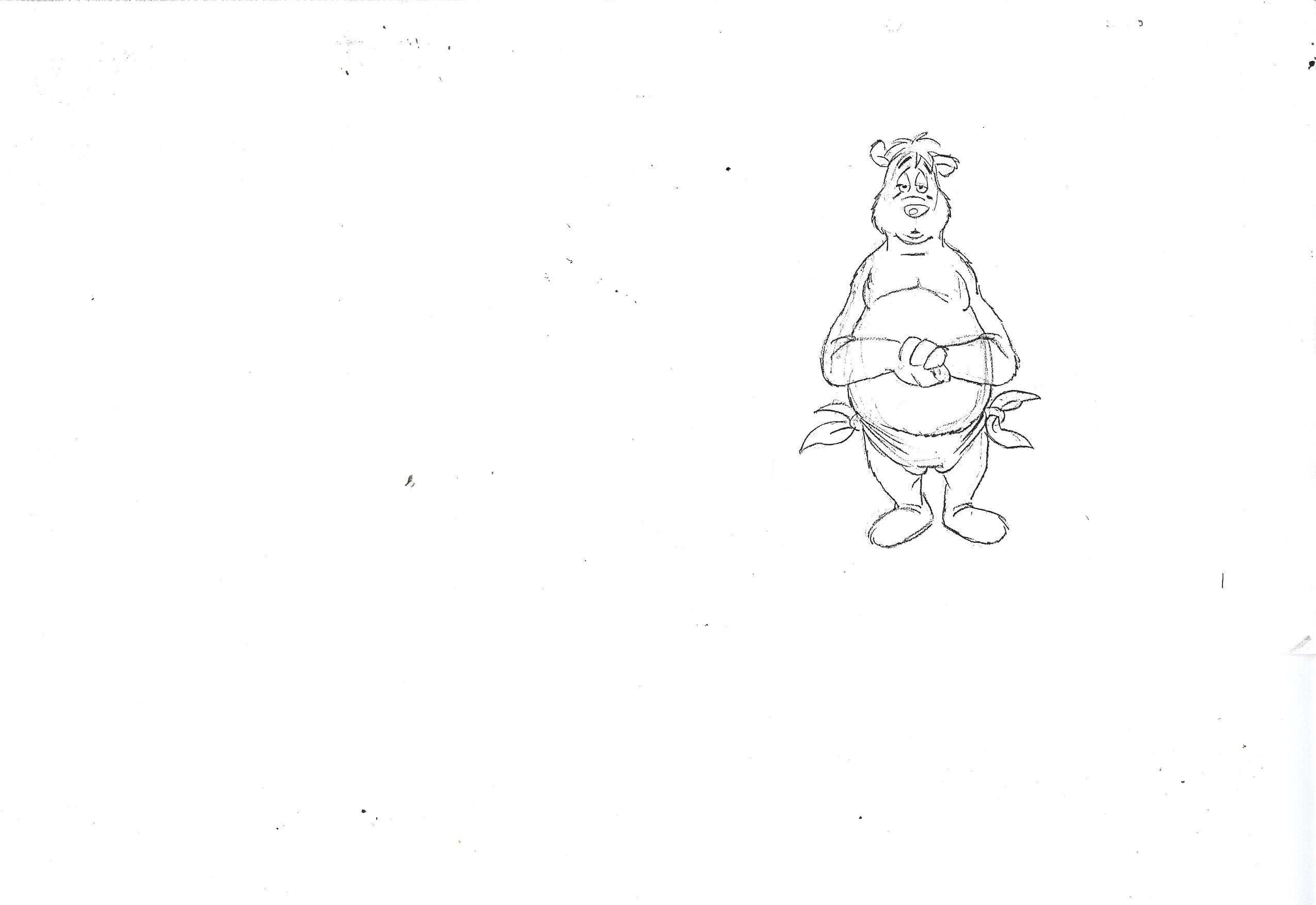
Chuck Jones’s Three Bears are the fairy-tale family turned inside out. Henry, the father, is small, loud and always one insult away from exploding. Mama Bear is weary and long-suffering. Junyer is enormous, slow and devoted to a father who hits him over the head. Jones described them as the negative image of the ideal American family, and the comedy comes from watching them try, and fail, to behave like one.
| Also known as: | Henry Bear (Papa), Mama Bear, Junyer Bear |
|---|---|
| Species: | Bears |
| First appearance: | Bugs Bunny and the Three Bears (1944) |
| Created by: | Chuck Jones |
| Original voice: | Papa: Mel Blanc and Billy Bletcher; Mama: Bea Benaderet; Junyer: Kent Rogers (1944), then Stan Freberg |
| Signature lines: | "But Henry..." (Mama Bear) |
| Frequent co-stars: | Bugs Bunny |
The family debuted in Bugs Bunny and the Three Bears (1944), where Bugs plays the Goldilocks role. Jones returned to them on their own in four more shorts through A Bear for Punishment (1951). Jones counted these among his earliest cartoons made purely to be funny, alongside the Hubie and Bertie and Charlie Dog shorts.
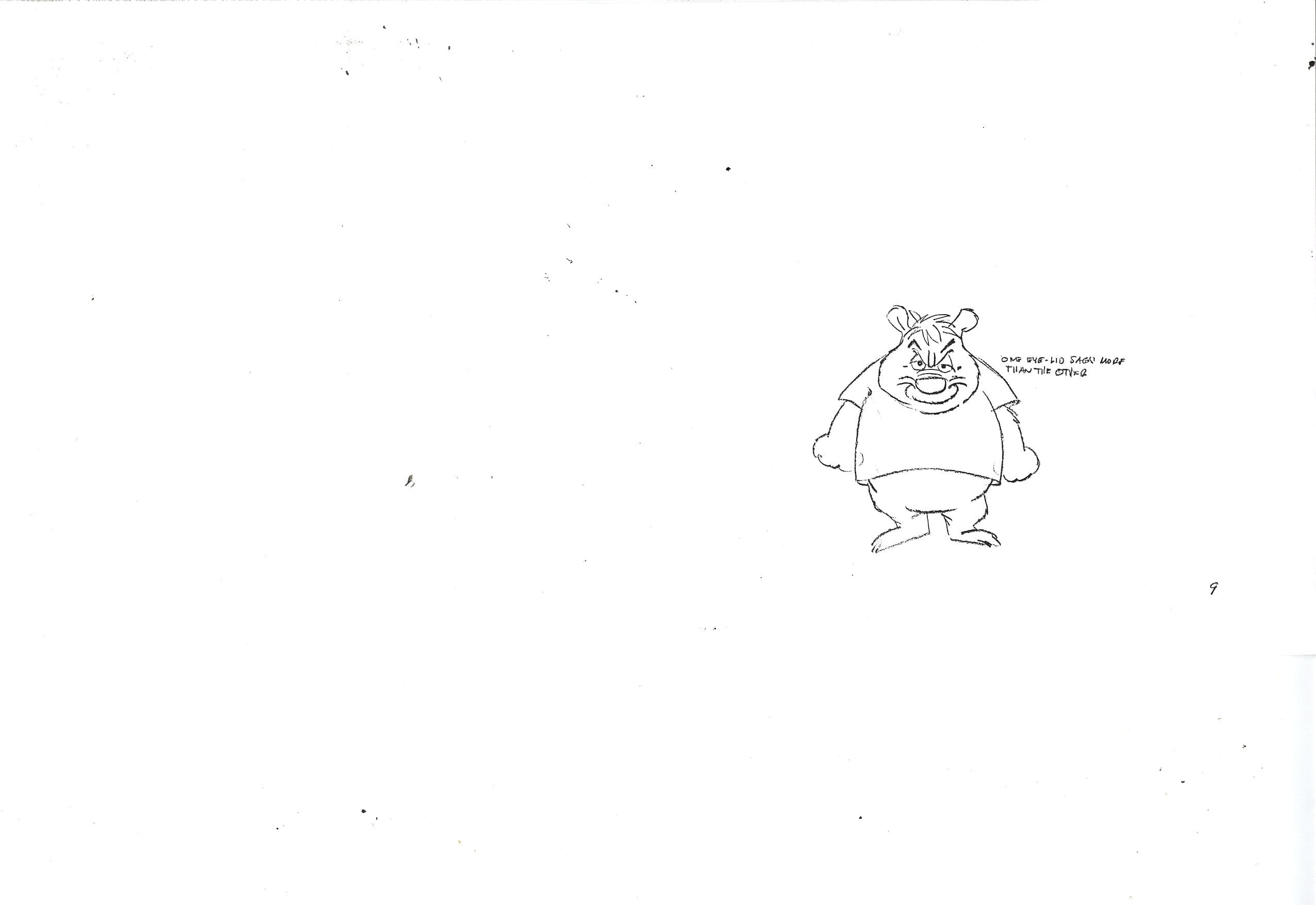
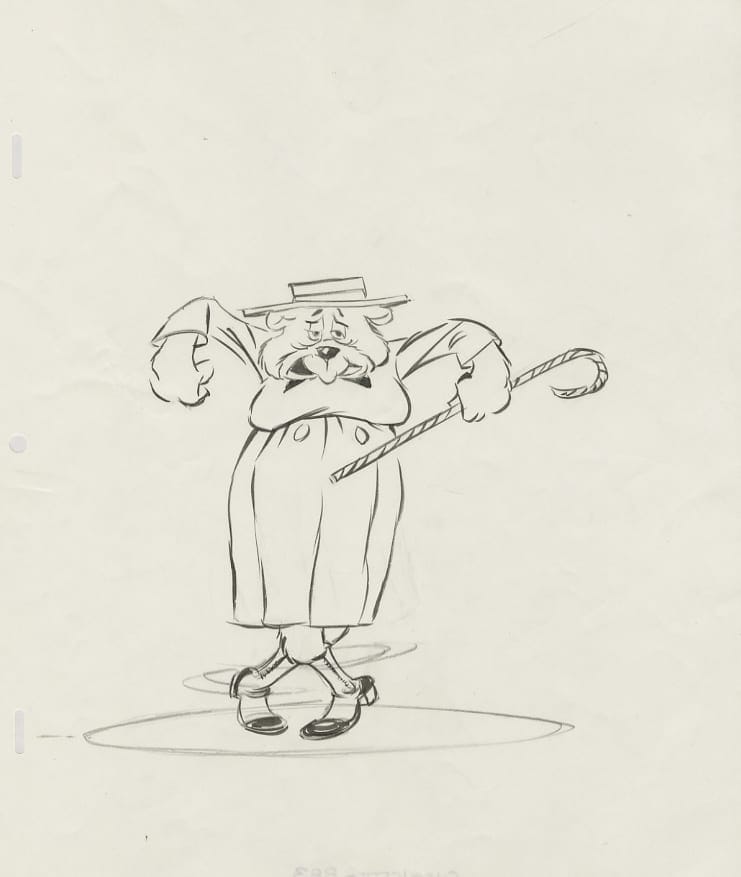
Jones found the bears fun to work with but hard to draw, because their bodies had to show their personalities directly: Papa always on the verge of exploding, Mama frumpy and tired, Junyer an oversized baby. In the folk tale the bears are only hosts for Goldilocks; Jones was more interested in their home life. He noted that the bears anticipated, by about two decades, television’s dysfunctional sitcom families.
The Three Bears are fun characters to work with but hard characters to draw, because their form reflects their character in a way that Bugs’s or Daffy’s form does not. Papa Bear has to be ready to explode, and sometimes he does. Mama Bear must look like a slattern, and Junyer appears to be what he is — an oversized baby.
In their traditional role, the Three Bears are paid, in a way, to go out and be the Three Bears with Goldilocks, but they also have a home life, which is what we encounter in the cartoons. Not only does the bear family contrast with our idea of normality, the three bears are in contrast to each other as well. They are the negative of the ideal American family, a prefiguration by several years of such early dysfunctional-family television sitcoms as All in the Family. There is the small, angry father, the same dowdy mother, and the big, dumb child.
My own experience as a father inspired at least one of these cartoons. A Bear for Punishment, in which Baby Bear forces his father to submit to the dubious joys of being pampered on Father’s Day, is based on my own efforts to escape a Father’s Day breakfast of scrambled eggs lovingly prepared for me by my daughter, Linda when she was about six years old.
– Chuck Jones