"Be vewy, vewy quiet. I'm hunting wabbits."
(A Wild Hare, 1940)
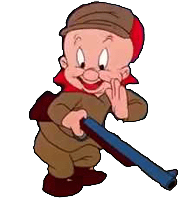
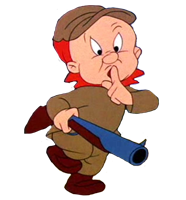
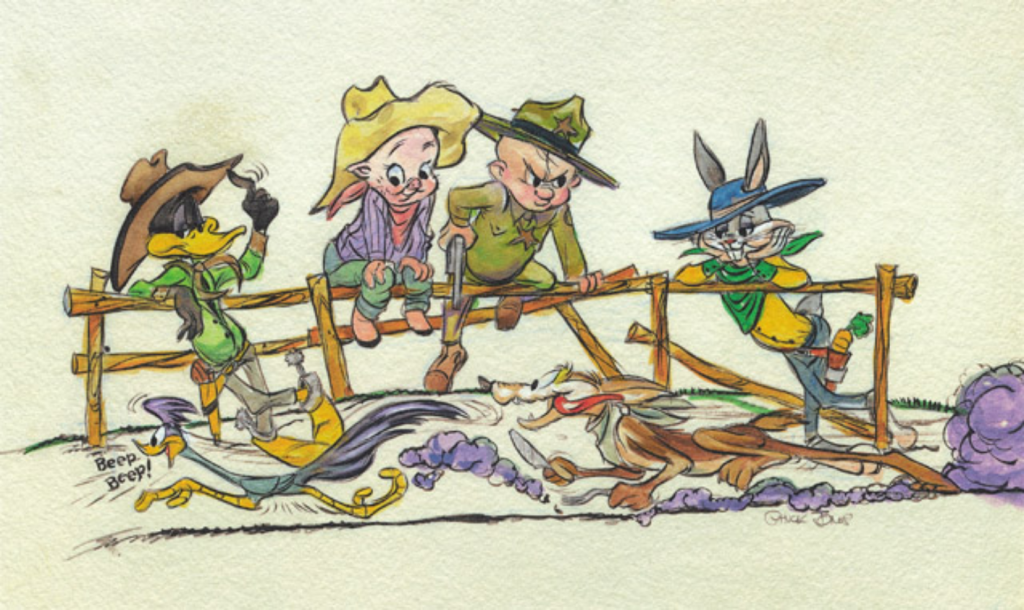
Elmer Fudd is the earnest little hunter who never gets his rabbit. Smaller than almost every other villain Bugs Bunny faces, he makes up the difference with an oversized shotgun and unshakable determination. Chuck Jones saw Elmer less as a menace than as a man trying to hold on to his dignity, and the comedy in Jones’s Elmer cartoons comes from that gap between his ambition and his luck. His soft, rounded speech made him one of the most imitated voices in animation.
| Species: | Human |
|---|---|
| First appearance: | Elmer's Candid Camera (1940), as the Elmer audiences know; an earlier prototype named Egghead appeared from 1937 |
| Created by: | Tex Avery and Chuck Jones |
| Original voice: | Arthur Q. Bryan (1939 to 1959) |
| Signature lines: |
|
| Frequent co-stars: | Bugs Bunny, Daffy Duck |
Elmer evolved from Egghead, a big-nosed comic figure Tex Avery introduced in Egghead Rides Again (1937). By 1940 the character had become the round-headed, soft-spoken hunter, and Chuck Jones directed Elmer’s Candid Camera (1940), which pitted him against an early version of the rabbit who would become Bugs. Later that year, Avery’s A Wild Hare fixed the pairing for good.
Arthur Q. Bryan gave Elmer his voice for nearly two decades, and the gentle speech pattern became inseparable from the character. Jones built several of his most famous shorts around Elmer, using him as the straight man for both Bugs and Daffy.
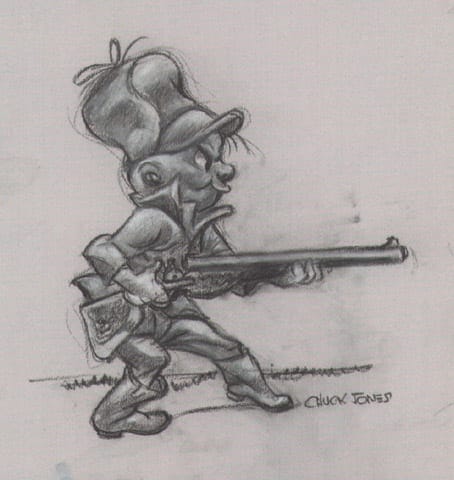
In his notes, Jones points out that Elmer is smaller than many of Bugs’s adversaries but carries a much bigger gun. Jones admits he never hunted, which made Elmer hard for him to identify with, yet part of him sympathized with a man who simply wants to be taken seriously. He read Elmer’s nervous laugh as anxiety: a way to buy time, like a speaker saying “er” while searching for the next word.
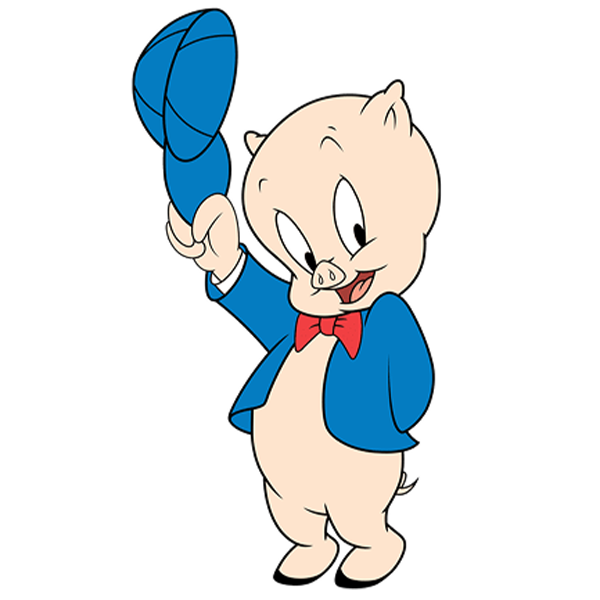
Visually, Elmer is built on the same simple structure as Porky Pig, with a round head, short body and hunting outfit. The design leaves room for the face to carry everything: wide eyes when he is sure of success, a quivering lip when he is not.
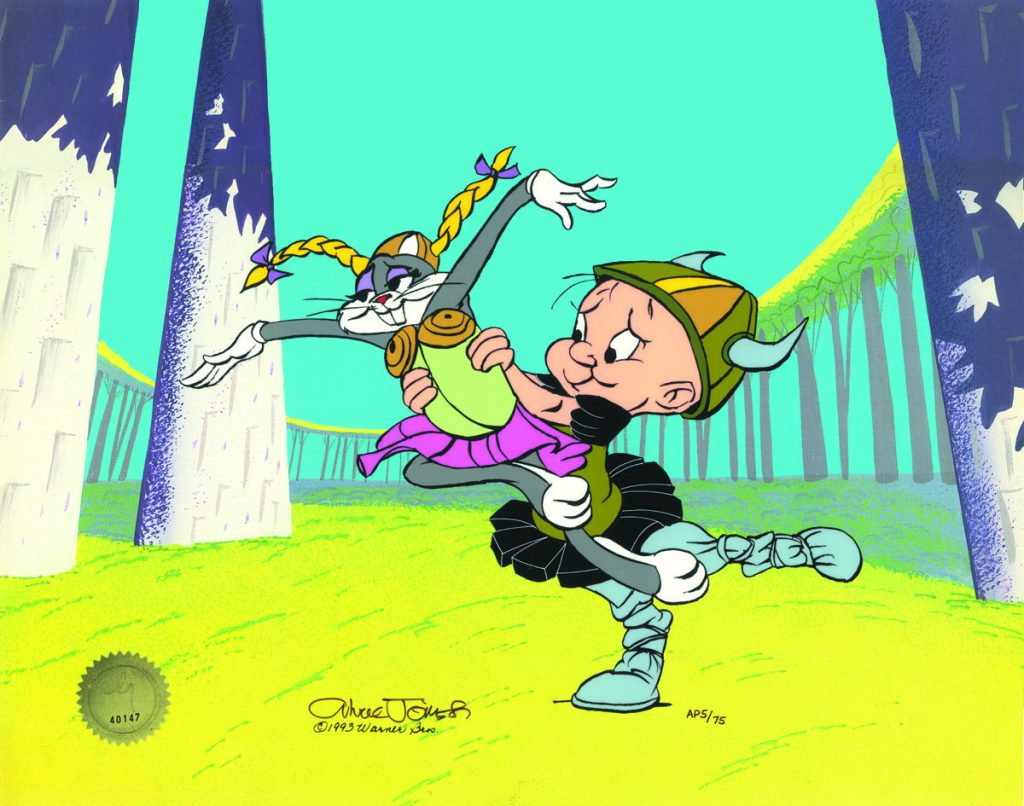
What’s Opera, Doc? is often ranked among the greatest cartoons ever made and was the first cartoon short named to the National Film Registry, in 1992. Mel Blanc and others filled in occasionally after Bryan’s death in 1959; later voices include Hal Smith, Jeff Bergman, Billy West and Eric Bauza.
Elmer Fudd is smaller than many of Bugs’s adversaries, but he carries a big gun, which makes even the saddest of wimps dangerous. When I was growing up, it was considered quite normal to buy a boy his first BB gun at an early age, soon to be followed by a more lethal .22 rifle. It was–and is–a classic practice for a man to dress up like Elmer Fudd and go out to shoot something in the woods.
I am, in fact, one of the few men of my age I know who has never done so. This makes it hard for me to identify with Elmer, but the part of Elmer Fudd that is Chuck Jones comes out when he defends his motive: “I’m a vegetawian. I just hunt for the sport of it.” In a way, I am excusing him for what he is. Elmer is more widely known for his voice than for his personality. He generally sounds as if he is about to cry, a mannerism that is an expression of his constant anxiety. The famous nervous laugh–he is really neither laughing nor crying–represents his attempt to buy time as he assesses a situation.
Occasionally the little “ha, ha, ha” is delivered as if he expects his audience to laugh with him, but of course nobody responds. And what could be more terrifying than to say something you feel is funny, only to be met by silence? The laugh is Elmer’s version of “er,” a meaningless verbal gesture that falls into the category of displacement activities.

– Chuck Jones
Every piece in our Elmer Fudd collection is certified by the Chuck Jones family. Browse originals, limited editions and prints below, or contact our art consultants with any questions.