Bugs Bunny

"Eh, what's up, Doc?"

(A Wild Hare, 1940)

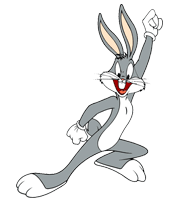
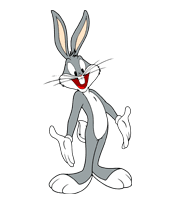
Bugs Bunny is the unflappable rabbit at the center of Warner Bros. animation, and the character Chuck Jones returned to more than any other. Jones’s Bugs never goes looking for trouble. He minds his own business until someone pushes too far, then answers with wit, timing and a costume change. That restraint is what makes his victories feel earned, whether the opponent is Elmer Fudd, a towering bullfighter or a Martian with a disintegrator. Jones summed him up as part Dorothy Parker, part Errol Flynn: a sharp tongue with a swashbuckler’s ease.

Bugs Bunny
Bugs Bunny

Character Details

Species:Rabbit
First appearance:A Wild Hare (1940)
Created by:Developed at Leon Schlesinger Productions by Ben "Bugs" Hardaway, Tex Avery, Bob Clampett, Friz Freleng, Chuck Jones and Robert McKimson
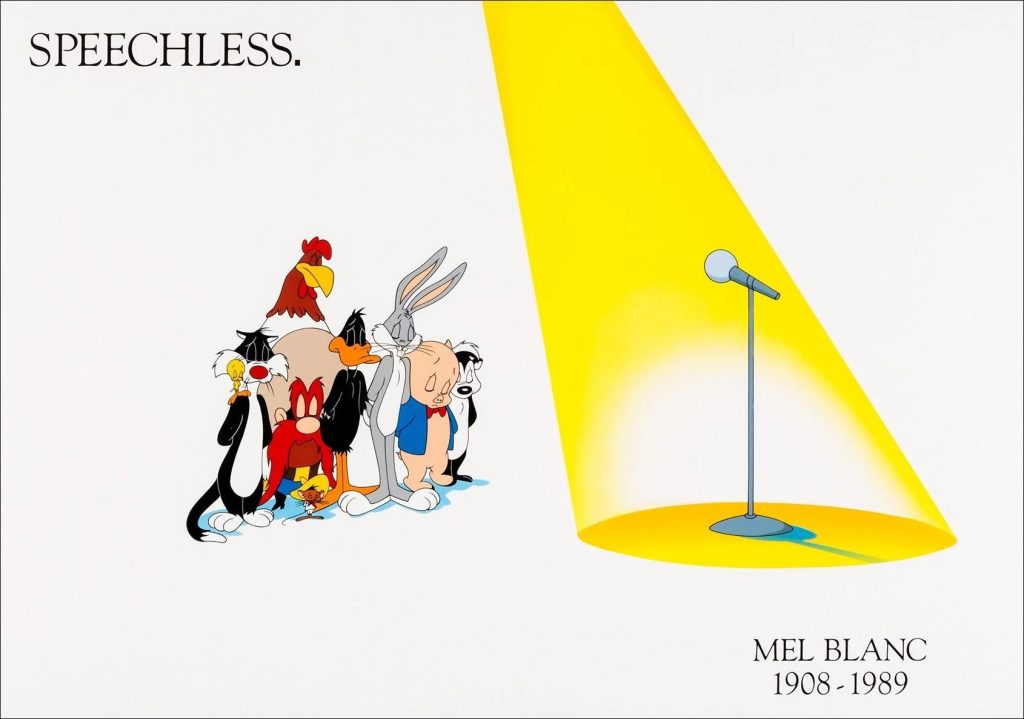
Original voice:Mel Blanc (1940 to 1989)
Signature lines:
  • "Eh, what's up, Doc?"
  • "Of course you know, this means war!"
  • "What a maroon!"
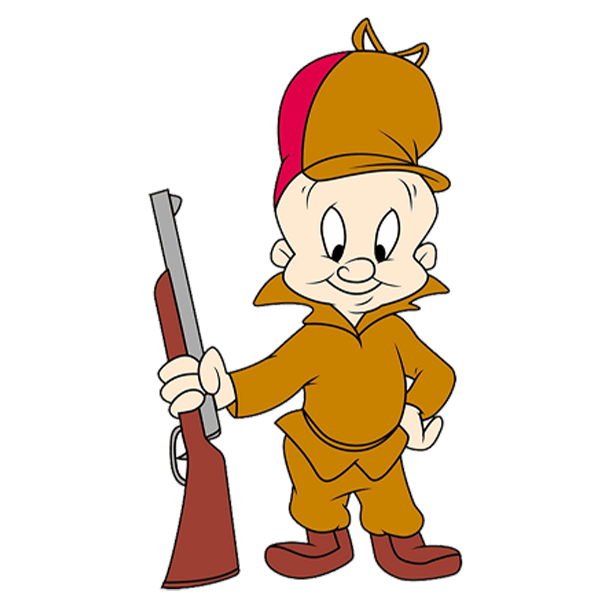
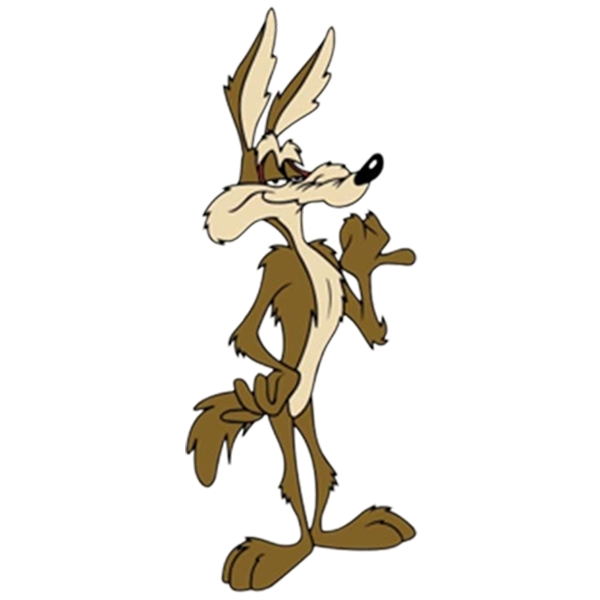
Frequent co-stars:Daffy Duck, Elmer Fudd, Wile E. Coyote, Marvin the Martian, Witch Hazel, Gossamer

Origins

Bugs grew out of an earlier, zanier rabbit seen in Porky’s Hare Hunt (1938), a cartoon co-directed by Ben “Bugs” Hardaway, whose nickname gave the character his name. Tex Avery’s A Wild Hare (1940) introduced the calm, carrot-chewing Bugs and his first meeting with Elmer Fudd, and the studio’s directors spent the next two decades refining him.

Jones shaped the most stylish version of the character. Where other directors let Bugs act on impulse, Jones gave him a rule: he only fights back when provoked. That single change turned Bugs from a trickster into a counterpuncher, and it underpins Jones’s best-known Bugs cartoons, from the opera house of The Rabbit of Seville to the bullring of Bully for Bugs. Bugs went on to star in more than 175 theatrical shorts.

Personality and Design

Jones’s Bugs is relaxed, confident and endlessly inventive, with a performer’s love of an audience. He is never cruel for its own sake. Jones noted that Bugs was at his best facing enormous villains, such as Hassan in Ali Baba Bunny, Crusher in Bunny Hugged and Nasty Canasta in Barbary Coast Bunny, because a small, unbothered hero makes the mismatch funnier.

Jones built the face from a tiny triangular nose, placing the eyes and ears along lines drawn from its corners. He gave Bugs three whiskers per side, although producer Leon Schlesinger preferred two to save on drawing time. Heavy cheeks hide most of the mouth, so a small visible mouth carries the expression: rising for a smile, sagging for sorrow, one side up and one down for Bugs’s signature sardonic look.

Key Cartoons

  • A Wild Hare (1940): Tex Avery’s short introduces the finished Bugs and his rivalry with Elmer.
  • Hair-Raising Hare (1946): Bugs outwits the hulking orange monster later named Gossamer.
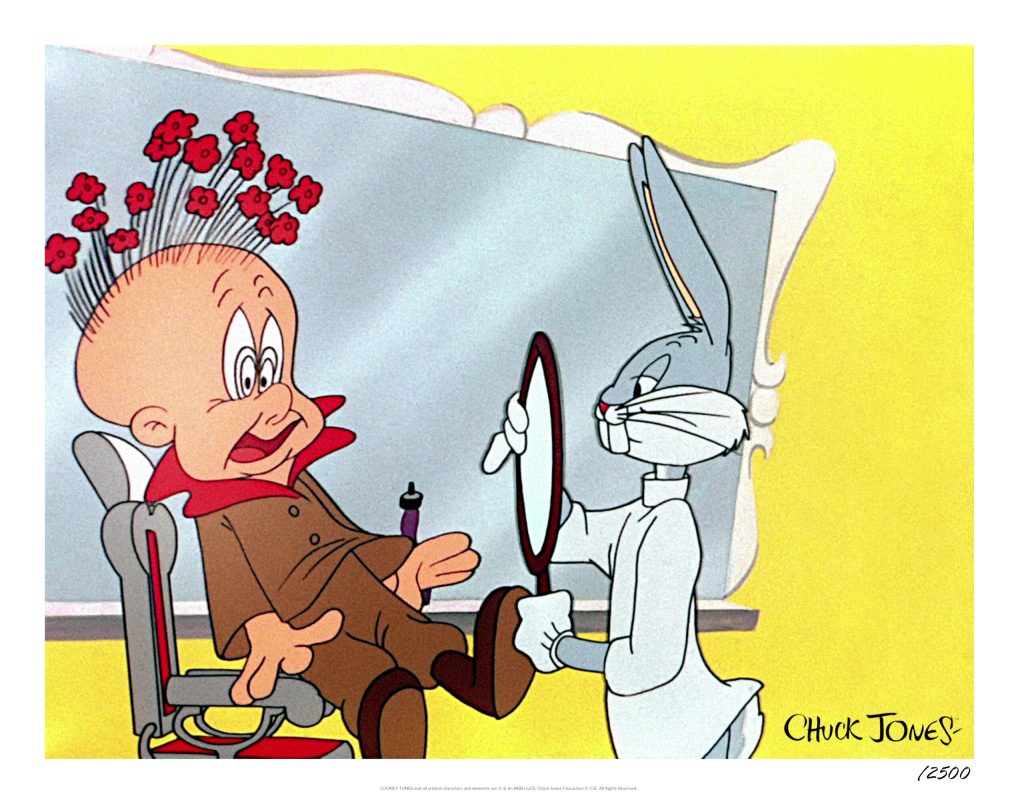
  • The Rabbit of Seville (1950): Bugs turns Rossini’s opera into a barbershop chase.
  • Rabbit Fire (1951): the first of the “hunting trilogy” with Daffy and Elmer.
  • Bunny Hugged (1951): Bugs takes on the wrestler Crusher.
  • Operation: Rabbit (1952): Bugs meets a talking Wile E. Coyote.
  • Bully for Bugs (1953): a wrong turn at Albuquerque lands Bugs in a bullring.
  • Beanstalk Bunny (1955): Bugs, Daffy and a giant Elmer retell the fairy tale.
  • Ali Baba Bunny (1957): Bugs and Daffy stumble into a treasure cave.
  • What’s Opera, Doc? (1957): Wagner, Elmer and a Valkyrie Bugs in six minutes.

Legacy

Bugs became the face of Warner Bros. animation and one of the most recognized characters in film. What’s Opera, Doc? was the first cartoon short selected for the U.S. National Film Registry, in 1992, and Bugs received a star on the Hollywood Walk of Fame in 1985. After Mel Blanc’s death in 1989, voice actors including Jeff Bergman, Greg Burson, Billy West, Joe Alaskey, Samuel Vincent and Eric Bauza carried the role forward. Jones painted and drew Bugs for the rest of his life, and those works form the core of the Chuck Jones Gallery collection.

In Chuck's Words

My Bugs doesn’t look like a rabbit; he looks like Bugs Bunny. I have often told eager students that the easiest way to draw him is probably to draw a carrot and then hook a rabbit onto it. However, I usually begin a drawing of Bugs with the tiny triangle that passes as the nose. The ears and eyes are located on imaginary lines leading out from the angles of the nose. Bugs is actually a bit cross-eyed, but we never made a point of that.

If I am in a generous mood, I allow him three whiskers, in spite of Leon Schlesinger [the original producer of Looney Tunes], who thought we could save money by using only two. Bugs has very heavy cheeks, which cover up a lot of his mouth, and that leaves me very little of the mouth to work with, even though the small visible section of the mouth is vital to an understanding of his character.

When he is happy, the inference is that the smile goes way up under the cheeks. When he is sad, the little visible part sags and the cheeks droop. To give him a sardonic look, I draw one side up and the other down. Bugs Bunny was most at home with the challenge of gigantic villains, such as Hassan, the guardian of the cave in Ali Baba Bunny, the muscle-bound Crusher (Bunny Hugged), or Nasty Canasta (Barbary Coast Bunny), his long-time adversary.

I never consider the size of characters who are not going to work together. Just for the fun of it, I occasionally put them alongside each other in a line-up, but that has nothing to do with picture making.


– Chuck Jones

From the Sketch Pad

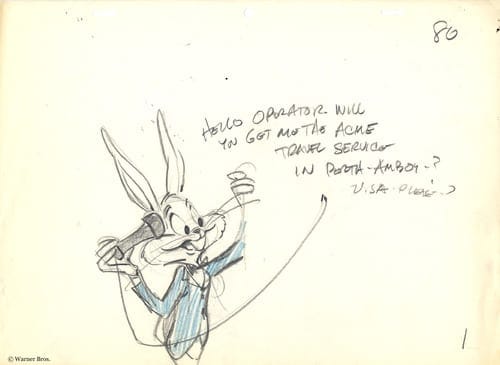
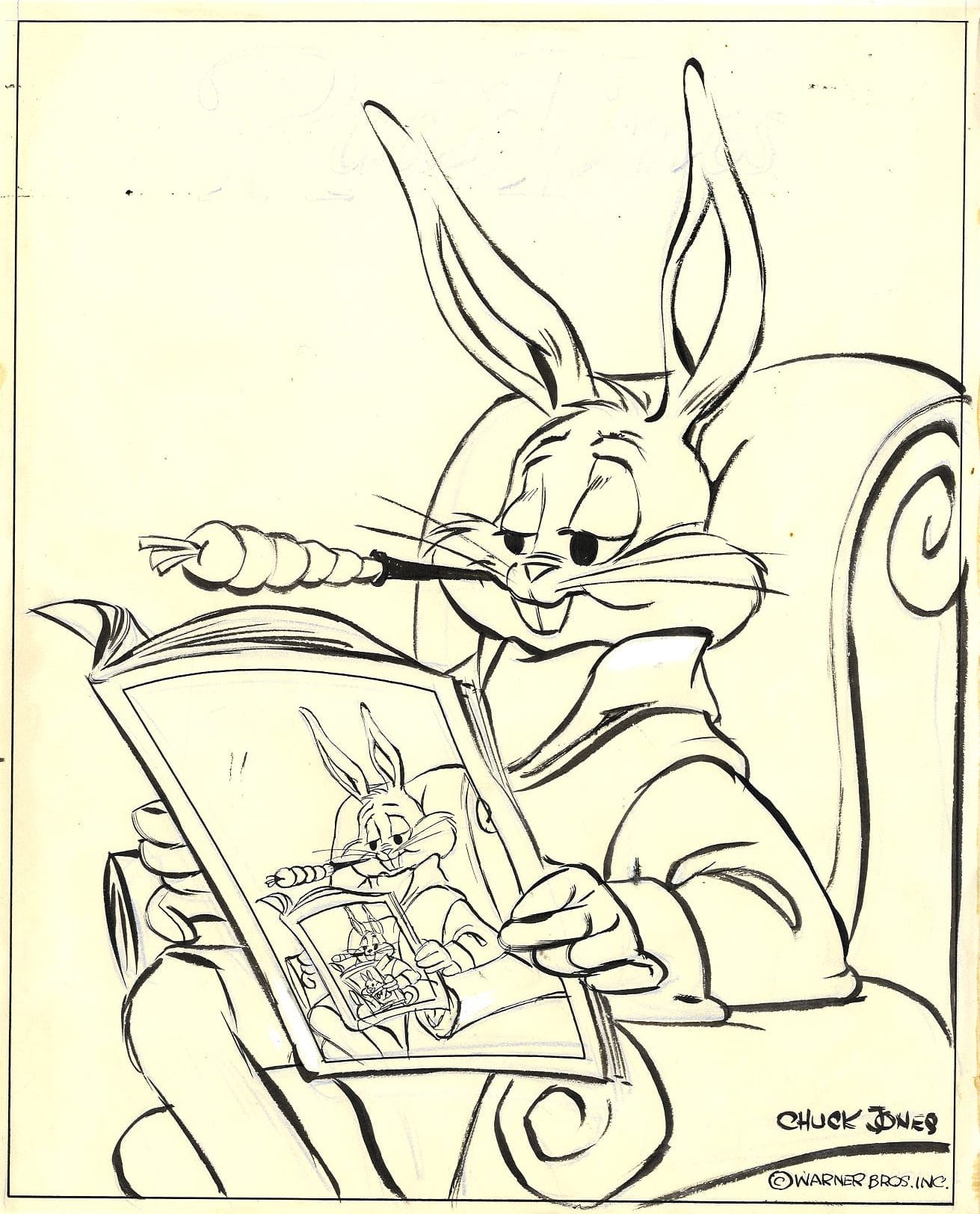
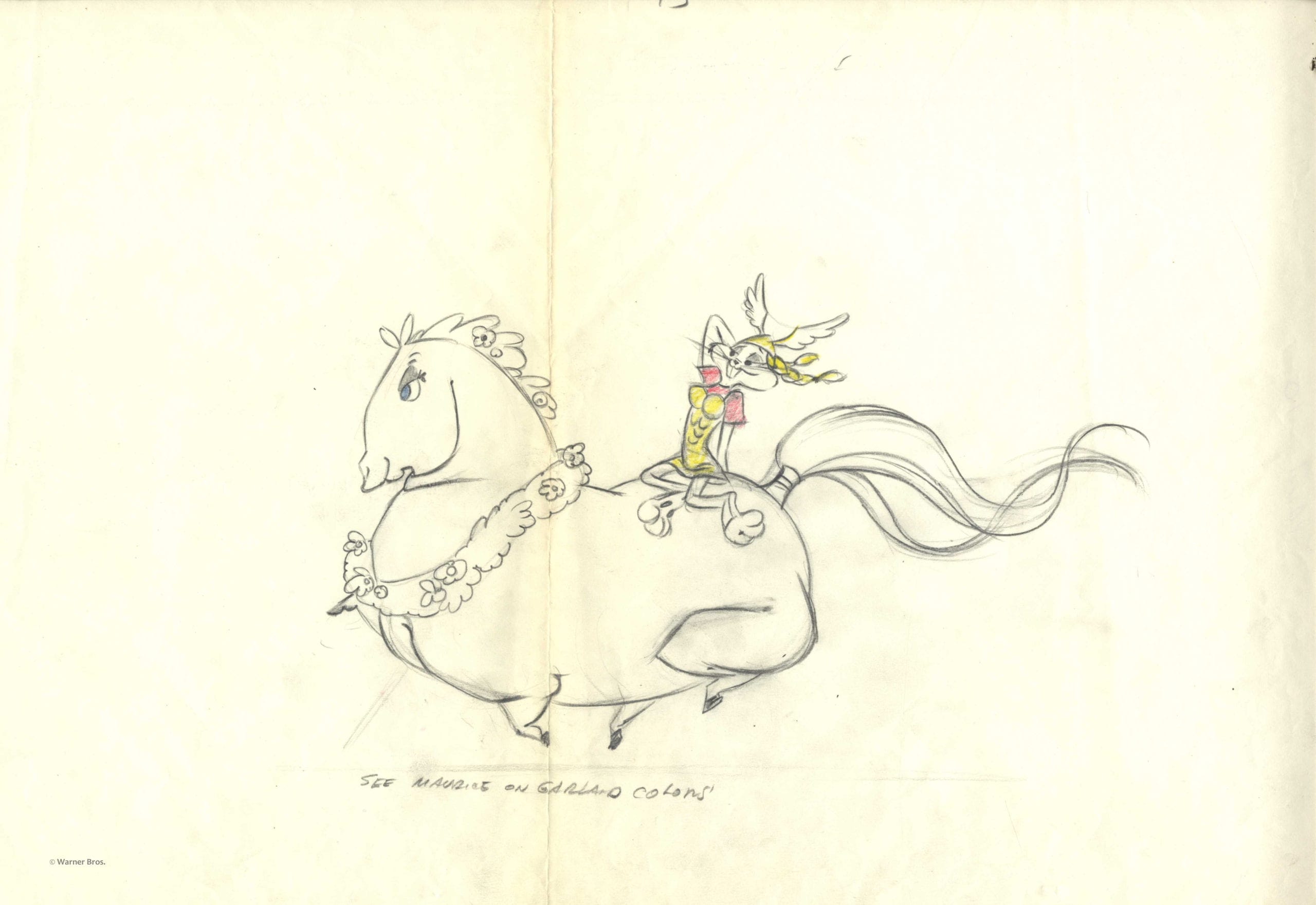
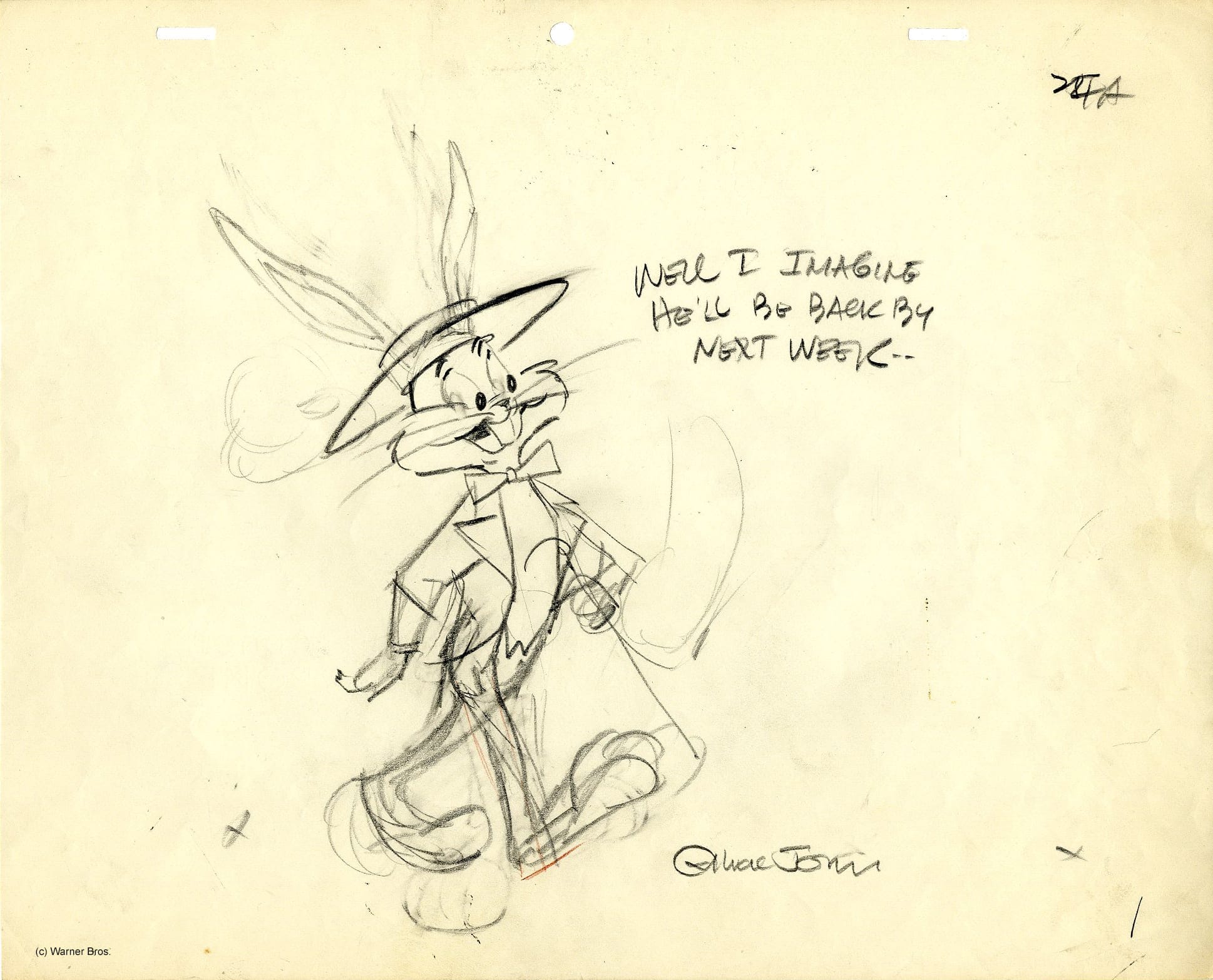
Bugs Bunny Hello Operator SketchBugs Bunny Reading The Papper SketchBugs Bunny Lady Unicorn SketchWell I imagine He'll Be Back By Next Week Sketch

Collect Bugs Bunny Art

Every piece in our Bugs Bunny collection is certified by the Chuck Jones family. Browse originals, limited editions and prints below, or contact our art consultants with any questions. For paintings and cels, see the Bugs Bunny Painting collection.

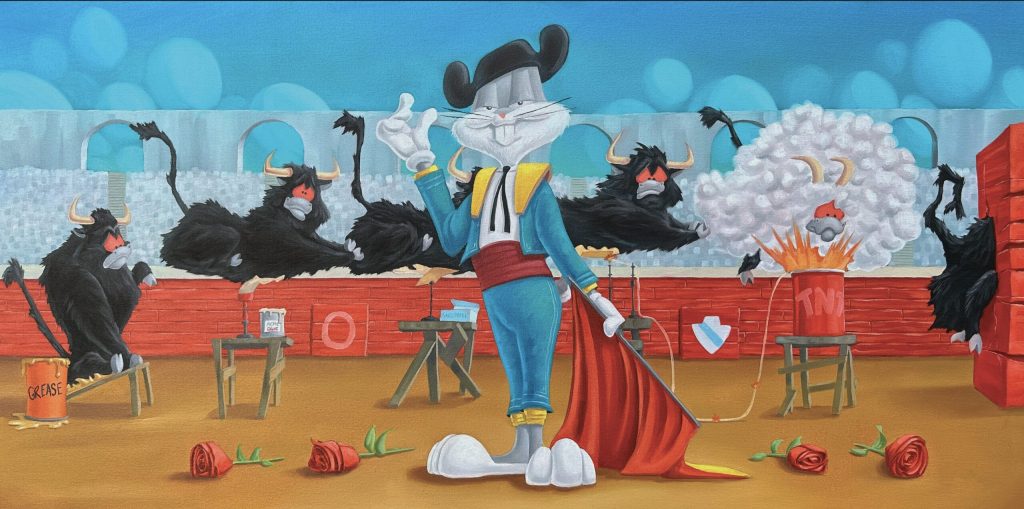
Whole Lotta Bull

Price range: $450.00 through $695.00

Select options This product has multiple variants. The options may be chosen on the product page
86046-One Froggy Witness SN 1

Price range: $795.00 through $995.00

Select options This product has multiple variants. The options may be chosen on the product page
BS0018P_Rhapsody Rabbit

Price range: $425.00 through $650.00

Select options This product has multiple variants. The options may be chosen on the product page